
Online Database of Chemicals from Around the World
| Hefei TNJ Chemical Industry Co., Ltd. | China | |||
|---|---|---|---|---|
 | www.tnjchem.com | |||
 | +86 (551) 6541-8684 | |||
 | +86 (551) 6541-8697 | |||
 | sales@tnjchem.com | |||
| Chemical manufacturer since 2001 | ||||
| chemBlink Standard supplier since 2010 | ||||
| BOC Sciences | USA | |||
|---|---|---|---|---|
| www.bocsci.com | |||
| +1 (631) 485-4226 | |||
| +1 (631) 614-7828 | |||
| info@bocsci.com | |||
| Chemical manufacturer | ||||
| chemBlink Standard supplier since 2010 | ||||
| Alfa Chemistry | USA | |||
|---|---|---|---|---|
| www.alfa-chemistry.com | |||
| +1 (516) 734-6573 | |||
| +1 (516) 927-0118 | |||
| support@alfa-chemistry.com | |||
| Chemical manufacturer since 2005 | ||||
| chemBlink Standard supplier since 2012 | ||||
| Qingdao Marram Chemical Co., Ltd. | China | |||
|---|---|---|---|---|
| www.marramchem.com | |||
| +86 15386945353 | |||
| +86 15386945353 | |||
| chaijing@marramchem.cn | |||
 | WeChat: 15386945353 | |||
 | WhatsApp:+86-18234460962 | |||
| Chemical manufacturer since 2026 | ||||
| chemBlink Standard supplier since 2026 | ||||
| Classification | Organic raw materials >> Inorganic acid ester |
|---|---|
| Name | Dioctyl carbonate |
| Synonyms | Carbonic acid dioctyl ester |
| Molecular Structure | 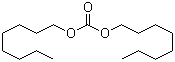 |
| Molecular Formula | C17H34O3 |
| Molecular Weight | 286.45 |
| CAS Registry Number | 1680-31-5 |
| EC Number | 434-850-2 |
| SMILES | CCCCCCCCOC(=O)OCCCCCCCC |
| Density | 0.9±0.1 g/cm3 Calc.* |
|---|---|
| Boiling point | 350.9±11.0 °C 760 mmHg (Calc.)* |
| Flash point | 134.7±8.4 °C (Calc.)* |
| Index of refraction | 1.442 (Calc.)* |
| * | Calculated using Advanced Chemistry Development (ACD/Labs) Software. |
| Hazard Symbols |  GHS07 Warning Details |
|---|---|
| Risk Statements | H302+H312+H332-H315-H319-H227 Details |
| Safety Statements | P501-P261-P270-P210-P271-P264-P280-P370+P378-P337+P313-P305+P351+P338-P362+P364-P332+P313-P301+P312+P330-P302+P352+P312-P304+P340+P312-P403+P235 Details |
| SDS | Available |
 chemBlink Chemical Story
|
The feel of a skin-care product depends partly on molecules that never appear as its headline active ingredient. Dioctyl carbonate, CAS 1680-31-5, is one such supporting material. In cosmetic ingredient terminology it is associated with dicaprylyl carbonate. Its story concerns how an oily liquid can help a formulation spread, carry other ingredients, and leave a particular sensory impression, rather than how it produces a biological treatment effect. The defined compound contains two straight eight-carbon groups linked through a carbonate unit. Its formula is C17H34O3. A carbonate ester has two oxygen-linked organic groups attached to the same carbonyl carbon. This arrangement differs from the carboxylic acid esters also common in cosmetic oils. Calling both materials esters does not make their structures, polarity, or formulation behavior identical. The name also needs care. An octyl group is not automatically the branched 2-ethylhexyl group, even though both contain eight carbons. The CAS identity here refers to the linear-chain compound. Meanwhile, a commercial ingredient must still be understood through its supplier specification: an ingredient name alone does not establish the exact composition, purity, or impurity profile of every marketed grade. Structural identity and the composition of a supplied batch answer different questions. BASF describes its dicaprylyl carbonate ingredient as a rapidly spreading emollient with a dry, velvety sensory character. Its technical information also discusses pigment dispersion and the solubilization of crystalline ultraviolet filters. These are useful examples of formulation functions, but they are supplier descriptions of an ingredient in applications, not a promise that every cream containing the molecule will feel or perform the same way. Consider a sunscreen containing a crystalline oil-soluble filter. The filter must remain suitably incorporated in the formulation rather than separating into unwanted crystals during storage. An oil phase can contribute to that task by acting as a solvent or carrier. This does not turn the carrier itself into a demonstrated ultraviolet filter. Nor does dissolving an active ingredient establish the finished product's protection factor, which requires assessment of the complete formulation. Manufacturing provides another perspective on the carbonate linkage. A published Chinese patent describes producing dioctyl carbonate from dimethyl carbonate and n-octanol through transesterification, followed by purification. At the level of molecular bookkeeping, one carbonate's short alkoxy groups are replaced by longer ones. The patent illustrates a production route; its particular catalyst, equipment, and purification claims should not be taken as the universal method used for all commercial material. Purification matters because a formulation ingredient is experienced as more than a structural formula. Residual starting alcohol, other components, color, and odor can influence whether a grade is suitable for a particular product. Likewise, spreading on a test surface, dissolving a filter, and remaining stable in an emulsion are separate performance questions. A favorable result in one test cannot stand in for the others. For example, changing the oil phase may alter several properties at once, so a comparison should hold the rest of the formulation suitably controlled. Otherwise, a difference in sensory testing cannot confidently be attributed to the carbonate ingredient alone. Dioctyl carbonate therefore offers a useful view of the chemistry behind texture. Its value can lie in helping a carefully designed mixture behave consistently, even when the molecule is not the ingredient advertised on the front of a package. Understanding that contribution requires both a precise chemical identity and evidence from the actual formulation. References: 1. TCI. Dioctyl Carbonate, product D6436; CAS 1680-31-5. https://www.tcichemicals.com/CA/en/p/D6436 2. BASF. Cetiol CC, dicaprylyl carbonate: ingredient functions and applications. https://care360.basf.com/global/en/Product-Finder/30527869 3. CN110857274B. Preparation of cosmetic-grade dioctyl carbonate. https://patents.google.com/patent/CN110857274B/en |
| Market Analysis Reports |