
Online Database of Chemicals from Around the World
| Glentham Life Sciences | UK | |||
|---|---|---|---|---|
 | www.glenthamls.com | |||
 | +44 (2033) 978-798 | |||
 | +44 (2033) 978-909 | |||
 | info@glenthamls.com | |||
| Chemical distributor since 2013 | ||||
| chemBlink Standard supplier since 2013 | ||||
| Hangzhou Leap Chem Co., Ltd. | China | |||
|---|---|---|---|---|
| www.leapchem.com | |||
| +86 (571) 8771-1850 | |||
| market19@leapchem.com | |||
 | QQ Chat | |||
| Chemical manufacturer since 2006 | ||||
| chemBlink Standard supplier since 2015 | ||||
| Vevau Molsieve | China | |||
|---|---|---|---|---|
| puremolsieve.com | |||
| +86 (199) 2473-6346 | |||
| jgyc3812@agent.qq.com | |||
 | WhatsApp:+86 199 2473 6346 | |||
| Chemical manufacturer since 2011 | ||||
| chemBlink Standard supplier since 2026 | ||||
| Classification | Analytical chemistry >> Analytical reagent >> Common analytical reagents |
|---|---|
| Name | Zeolite 3A |
| Synonyms | Molecular sieve; Purmol 3A; Purmol 3STH; S 136; Siliporite 3A; Siliporite NK 30; Siliporite NK 30AP; Tricat 3A; UOP-AS 5078; Zeolum A 3 |
| Molecular Structure | 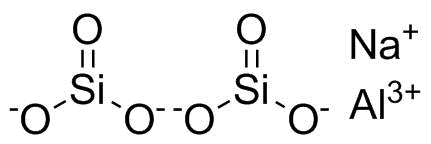 |
| CAS Registry Number | 308080-99-1 |
| EC Number | 681-678-0 |
| SMILES | [O-][Si](=O)[O-].[O-][Si](=O)[O-].[Na+].[Al+3] |
| Hazard Symbols |  GHS07 Warning Details |
|---|---|
| Risk Statements | H315-H319-H335 Details |
| Safety Statements | P261-P264-P264+P265-P271-P280-P302+P352-P304+P340-P305+P351+P338-P319-P321-P332+P317-P337+P317-P362+P364-P403+P233-P405-P501 Details |
| SDS | Available |
 chemBlink Chemical Story
|
A bottle of clear solvent can still contain enough water to interfere with a sensitive experiment. Removing that water requires a way to distinguish small water molecules from the liquid surrounding them. Zeolite 3A provides one approach: a crystalline solid whose internal openings help control which molecules enter. Its usefulness depends on molecular access, rather than on an ability to recognize a liquid as visually wet or dry. The 3A designation refers to a nominal pore opening of about three angstroms, or 0.3 nanometers. This is vastly smaller than the millimeter-scale beads or granules sold in a bottle. Those visible particles contain the adsorbent structure, often together with material used to shape and strengthen them. Confusing particle size with pore opening hides the very feature that makes a molecular sieve selective. Type 3A is associated with potassium-exchanged type A zeolite. Replacing part of the sodium cation population with potassium changes access through the framework windows. The aluminosilicate framework remains a solid network, while the extra-framework cations influence the effective opening and interactions with guest molecules. Consequently, the material cannot be understood simply as an inert sponge with arbitrarily drilled holes. CAS 308080-99-1 is used for commercial 3A molecular sieve products. It should not be read as a guarantee of a single small-molecule formula, fixed hydration level, or identical performance across grades. Water loading, cation composition, binders, and particle properties matter. The dry adsorbent and an adsorbent already exposed to humid surroundings may share a product name while having very different remaining capacity. Water can enter the small accessible pore system and interact strongly with the zeolite. Many larger solvent molecules are substantially excluded from that internal volume. This helps explain the use of 3A in solvent drying and ethanol dehydration. Manufacturer information from Zeochem describes selective water uptake while minimizing ethanol co-adsorption. Such selectivity is a practical property of the adsorbent and process conditions, rather than an absolute rule inferred from a single molecular diameter. An important difference from a chemical drying reaction is that the target water is adsorbed into the material. It need not be converted into another molecule to be removed from the surrounding liquid. Adsorption can also be reversed under appropriate regeneration conditions. Regeneration, however, is a material-conditioning operation: naming a zeolite does not establish that the contents of an opened container are ready for a demanding drying task. In 2010, D. Bradley G. Williams and Michelle Lawton compared several ways of drying organic solvents, using water measurements to evaluate the results. Their study included molecular sieves and emphasized quantitative assessment rather than inherited laboratory assumptions. The broader lesson is straightforward: a clear appearance and a familiar drying-agent label cannot substitute for measuring residual water when the application requires a defined level. Capacity and speed introduce further distinctions. A material can hold a useful amount of water at equilibrium yet take time to approach that state. Access through particles, contact with the liquid, and the initial water content affect the observed result. Removing water also does not remove every possible impurity or establish that a solvent is suitable for every subsequent reaction. Zeolite 3A connects an almost invisible structural feature with an everyday laboratory need. Its story is most accurately told through pore access, material condition, and measured water content. These ideas explain both why the solid can be effective and why a product name alone is not a complete drying specification. References: 1. Thermo Scientific. Molecular Sieves, 3A; CAS 308080-99-1, product 197245000. https://www.thermofisher.com/order/catalog/product/197245000 2. Zeochem. Ethanol Dehydration: selective water adsorption with 3A molecular sieves. https://zeochem.com/our-applications/ethanol-dehydration/ 3. Williams DBG, Lawton M. Drying of Organic Solvents: Quantitative Evaluation of the Efficiency of Several Desiccants. Journal of Organic Chemistry (2010). https://doi.org/10.1021/jo101589h |
| Market Analysis Reports |