
Online Database of Chemicals from Around the World
| Hangzhou Bm Chemical Co., Ltd. | China | |||
|---|---|---|---|---|
 | www.bmchemical.com | |||
 | +86 (571) 8733-0289 | |||
 | +86 (571) 8287-4083 | |||
 | info@bmchemical.com | |||
| Chemical manufacturer | ||||
| chemBlink Standard supplier since 2007 | ||||
| Changzhou Harvechem Ltd | China | |||
|---|---|---|---|---|
| www.harvechem.com | |||
| +86 (519) 8878-4888 8872-1112 | |||
| +86 (519) 8872-1515 | |||
| ppchem@vip.163.com harvechem@vip.163.com | |||
| Chemical manufacturer | ||||
| chemBlink Standard supplier since 2007 | ||||
| Shanghai Sinofluoro chemicals Co., Ltd. | China | |||
|---|---|---|---|---|
| www.sinofluoro.com | |||
| +86 (21) 6427-9360 | |||
| +86 (21) 6427-8603 | |||
| simon.lv@sinofluoro.com jerry.chen@sinofluoro.com | |||
 | QQ Chat | |||
| Chemical manufacturer since 2008 | ||||
| chemBlink Standard supplier since 2008 | ||||
| Shanghai T&W Pharmatech Co., Ltd. | China | |||
|---|---|---|---|---|
| www.trustwe.com | |||
| +86 (21) 6155-1611 6155-1413 6155-1420 | |||
| +86 (21) 5067-6805 | |||
| contact@trustwe.com | |||
| Chemical manufacturer since 2007 | ||||
| chemBlink Standard supplier since 2008 | ||||
| Simagchem Corporation | China | |||
|---|---|---|---|---|
| www.simagchem.com | |||
| +86 13806087780 | |||
| +86 (592) 268-0237 | |||
| sale@simagchem.com | |||
| Chemical manufacturer since 2002 | ||||
| chemBlink Standard supplier since 2008 | ||||
| Hefei TNJ Chemical Industry Co., Ltd. | China | |||
|---|---|---|---|---|
| www.tnjchem.com | |||
| +86 (551) 6541-8684 | |||
| +86 (551) 6541-8697 | |||
| sales@tnjchem.com | |||
| Chemical manufacturer since 2001 | ||||
| chemBlink Standard supplier since 2010 | ||||
| BOC Sciences | USA | |||
|---|---|---|---|---|
| www.bocsci.com | |||
| +1 (631) 485-4226 | |||
| +1 (631) 614-7828 | |||
| info@bocsci.com | |||
| Chemical manufacturer | ||||
| chemBlink Standard supplier since 2010 | ||||
| Hangzhou Ich Biofarm Co., Ltd. | China | |||
|---|---|---|---|---|
| www.ichemie.com | |||
| +86 (571) 2818-6870 | |||
| +86 (571) 8993-9479 | |||
| specialchem1@ichemie.com | |||
| QQ Chat | |||
| Chemical manufacturer since 2006 | ||||
| chemBlink Standard supplier since 2011 | ||||
| Intatrade Chemicals GmbH | Germany | |||
|---|---|---|---|---|
| www.intatrade.de | |||
| +49 (3493) 605-465 | |||
| +49 (3493) 605-470 | |||
| sales@intatrade.de | |||
| Chemical distributor | ||||
| chemBlink Standard supplier since 2011 | ||||
| Tianjin Collabrate Chemical Industry. Co., Ltd. | China | |||
|---|---|---|---|---|
| www.chemcollabrate.com | |||
| +86 (22) 6330-1939 | |||
| +86 (22) 6315-2797 | |||
| catherine_liu@chemcollabrate.com | |||
| Chemical manufacturer since 2007 | ||||
| chemBlink Standard supplier since 2013 | ||||
| Shenzhen Happy Pharmaceuticals Ltd. | China | |||
|---|---|---|---|---|
| www.happypharm.cn | |||
| +86 (536) 737-6118 | |||
| mark@happypharm.cn | |||
| QQ Chat | |||
| Chemical manufacturer since 2013 | ||||
| chemBlink Standard supplier since 2014 | ||||
| Hangzhou Leap Chem Co., Ltd. | China | |||
|---|---|---|---|---|
| www.leapchem.com | |||
| +86 (571) 8771-1850 | |||
| market19@leapchem.com | |||
| QQ Chat | |||
| Chemical manufacturer since 2006 | ||||
| chemBlink Standard supplier since 2015 | ||||
| Taizhou Bona Chemical Co., Ltd. | China | |||
|---|---|---|---|---|
| www.tzbnchem.com | |||
| +86 (576) 8831-2366 | |||
| +86 (576) 8870-7069 | |||
| kitty@tzbnchem.com | |||
| QQ Chat | |||
| Chemical manufacturer since 2011 | ||||
| chemBlink Standard supplier since 2018 | ||||
| LKT Laboratories, Inc. | USA | |||
|---|---|---|---|---|
| www.lktlabs.com | |||
| +1 (888) 558-5227 | |||
| +1 (651) 644-8357 | |||
| peacerli@mbolin-lktlabs.com | |||
| Chemical manufacturer | ||||
| Molekula Ltd | UK | |||
|---|---|---|---|---|
| www.molekula.com | |||
| +44 (1747) 831-066 | |||
| +44 (1747) 831-199 | |||
| info@molekula.com | |||
| Chemical manufacturer | ||||
| Santa Cruz Biotechnology, Inc. | USA | |||
|---|---|---|---|---|
| www.scbt.com | |||
| +1 (831) 457-3800 | |||
| +1 (831) 457-3801 | |||
| scbt@scbt.com | |||
| Chemical manufacturer | ||||
| Classification | Biochemical >> Chinese herbal medicine ingredients |
|---|---|
| Name | DL-Octopamine hydrochloride |
| Synonyms | DL-alpha-(Aminomethyl)-4-hydroxybenzyl alcohol hydrochloride; 1-(4-Hydroxyphenyl)-2-amino-ethanol hydrochloride |
| Molecular Structure | 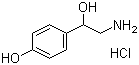 |
| Molecular Formula | C8H11NO2.HCl |
| Molecular Weight | 189.64 |
| CAS Registry Number | 770-05-8 |
| EC Number | 212-216-4 |
| SMILES | C1=CC(=CC=C1C(CN)O)O.Cl |
| Melting point | 170 °C (Decomposes) (Expl.) |
|---|---|
| Solubility | DMSO: 38 mg/mL, Water: 38 mg/mL (Expl.) |
| Hazard Symbols |  GHS07 Warning Details | ||||||||||||||||||||||||
|---|---|---|---|---|---|---|---|---|---|---|---|---|---|---|---|---|---|---|---|---|---|---|---|---|---|
| Risk Statements | H302-H312-H332 Details | ||||||||||||||||||||||||
| Safety Statements | P261-P264-P270-P271-P280-P301+P317-P302+P352-P304+P340-P317-P321-P330-P362+P364-P501 Details | ||||||||||||||||||||||||
| Hazard Classification | |||||||||||||||||||||||||
| |||||||||||||||||||||||||
| SDS | Available | ||||||||||||||||||||||||
 chemBlink Chemical Story
|
DL-Octopamine hydrochloride is the hydrochloride salt of DL-octopamine, a biogenic amine structurally related to norepinephrine. Chemically, it consists of an octopamine molecule, which is a hydroxylated phenethylamine, combined with hydrochloric acid to form a stable, crystalline salt suitable for pharmaceutical and research applications. The molecular formula of DL-octopamine hydrochloride is C8H12ClNO2. Octopamine was first identified as a naturally occurring compound in invertebrates, where it functions as a neurotransmitter, neuromodulator, and hormone. It is known for its role in regulating physiological processes such as muscle contraction, metabolism, and behavior in various species. The DL designation indicates that the compound is a racemic mixture of the dextrorotatory (D) and levorotatory (L) enantiomers, which may have differing biological activities. The discovery of octopamine in vertebrates, including humans, revealed its involvement in cardiovascular function, lipolysis, and central nervous system modulation. DL-octopamine hydrochloride is commonly used in research to study adrenergic receptor pharmacology and the effects of biogenic amines on physiological and neurological systems. In pharmaceutical and biochemical research, DL-octopamine hydrochloride serves as a tool compound for investigating adrenergic receptor subtypes, particularly the beta-3 adrenergic receptors. These receptors are implicated in metabolic regulation, making octopamine derivatives of interest in obesity and diabetes research. DL-octopamine hydrochloride is typically synthesized by chemical modification of tyramine or related phenethylamines, involving hydroxylation and subsequent salt formation with hydrochloric acid. Its crystalline hydrochloride form enhances stability, solubility in water, and ease of handling compared to the free base. The compound is water-soluble and can be administered in vitro or in vivo depending on the experimental design. It interacts with various adrenergic and trace amine-associated receptors, influencing neurotransmission, vascular tone, and metabolic pathways. Applications of DL-octopamine hydrochloride extend to neuropharmacology, physiology, and metabolism studies. It is employed to elucidate mechanisms underlying sympathetic nervous system responses and to explore potential therapeutic targets for metabolic disorders. Safety and handling of DL-octopamine hydrochloride require standard laboratory precautions due to its bioactive nature. Its pharmacological effects depend on dosage and receptor specificity, and it is not typically used as a therapeutic agent in humans. In summary, DL-octopamine hydrochloride is a racemic hydrochloride salt of octopamine, a biogenic amine with significant roles in neurotransmission and metabolism. Its chemical stability and biological activity make it a valuable compound in research exploring adrenergic receptor function and metabolic regulation. References 2015. Octopamine, the insect stress hormone, alters grooming pattern in the cockroach Periplaneta americana. Journal of Evolutionary Biochemistry and Physiology, 51(2). DOI: 10.1134/s0022093015020118 2009. Dopamine counteracts octopamine signalling in a neural circuit mediating food response in C. elegans. The EMBO Journal, 28(13). DOI: 10.1038/emboj.2009.194 2012. Chemical Identification, Emission Pattern and Function of Male-Specific Pheromones Released by a Rarely Swarming Locust, Schistocerca americana. Journal of Chemical Ecology, 38(12). DOI: 10.1007/s10886-012-0233-4 |
| Market Analysis Reports |