
Online Database of Chemicals from Around the World
| SynQuest Labs, Inc. | USA | |||
|---|---|---|---|---|
 | www.synquestlabs.com | |||
 | +1 (386) 462-0788 | |||
 | +1 (386) 462-7097 | |||
 | Sales@synquestlabs.com | |||
| Chemical manufacturer | ||||
| chemBlink Standard supplier since 2011 | ||||
| Finetech Industry Limited | China | |||
|---|---|---|---|---|
| www.finetechchem.com | |||
| +86 (27) 8746-5837 +86 18971612321 | |||
| +86 (27) 8777-2287 | |||
| sales@finetechnology-ind.com | |||
 | QQ Chat | |||
| Chemical manufacturer since 2009 | ||||
| chemBlink Standard supplier since 2019 | ||||
| Nanjing Wali Chemical Technology Co., Ltd. | China | |||
|---|---|---|---|---|
| www.njwali.com | |||
| 18005141382 | |||
| 18005141382@163.com | |||
| QQ Chat | |||
 | WeChat: 18005141382 | |||
| Chemical manufacturer since 2008 | ||||
| chemBlink Standard supplier since 2026 | ||||
| HanChem Co., Ltd. Head Office | South Korea | |||
|---|---|---|---|---|
| www.hanchem.net | |||
| +82 (42) 931-2640 | |||
| +82 (42) 931-2643 | |||
| sales@hanchem.net | |||
| Chemical manufacturer since 1999 | ||||
| Classification | Organic raw materials >> Heterocyclic compound >> Carbazoles |
|---|---|
| Name | 11H-Benzo[a]carbazole |
| Synonyms | 1,2-Benzocarbazole; 11-Azachrysofluorene; Benzo[a]carbazole; NSC 403640; NSC 60421 |
| Molecular Structure | 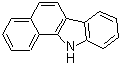 |
| Molecular Formula | C16H11N |
| Molecular Weight | 217.27 |
| CAS Registry Number | 239-01-0 |
| EC Number | 205-945-4 |
| SMILES | C1=CC=C2C(=C1)C=CC3=C2NC4=CC=CC=C34 |
| Density | 1.3±0.1 g/cm3 Calc.* |
|---|---|
| Melting point | 233 °C (Expl.) |
| Boiling point | 456.1±14.0 °C 760 mmHg (Calc.)* |
| Flash point | 207.9±12.7 °C (Calc.)* |
| Index of refraction | 1.823 (Calc.)* |
| * | Calculated using Advanced Chemistry Development (ACD/Labs) Software. |
| Hazard Symbols |   GHS07;GHS09 Warning Details | ||||||||||||
|---|---|---|---|---|---|---|---|---|---|---|---|---|---|
| Risk Statements | H302-H315-H319-H411 Details | ||||||||||||
| Safety Statements | P264-P264+P265-P270-P273-P280-P301+P317-P302+P352-P305+P351+P338-P321-P330-P332+P317-P337+P317-P362+P364-P391-P501 Details | ||||||||||||
| Hazard Classification | |||||||||||||
| |||||||||||||
| SDS | Available | ||||||||||||
 chemBlink Chemical Story
|
A molecule in crude oil can preserve clues about the route the oil followed underground. Benzo[a]carbazole is one of the nitrogen-containing aromatic compounds investigated for that purpose. Its framework consists of four fused rings, including a five-membered ring containing nitrogen. The compound registered as CAS 239-01-0 is specifically 11H-benzo[a]carbazole. The bracketed letter describes the position of ring fusion and distinguishes it from benzo[c]carbazole, a separate structural isomer. That distinction matters well beyond nomenclature. Moving the fusion position changes the outline of the molecule while preserving its elemental composition. Two isomers can therefore have the same molecular mass but interact differently with surrounding material. In petroleum geochemistry, researchers have examined whether such differences affect retention as oil contacts rock surfaces during migration. The relevant chemistry involves the whole molecular surface, together with the nitrogen-containing ring, rather than simply the number of carbon atoms. Carbazoles belong to the pyrrolic class of nitrogen compounds. The nitrogen lone pair contributes to the aromatic system, so their behavior differs from that of pyridine-like basic nitrogen compounds. An N-H group is still available for interactions with other molecules. This combination of an aromatic carbon framework and a chemically distinctive nitrogen site helps make carbazole distributions informative in complex petroleum mixtures. It also explains why nitrogen compounds cannot all be treated as one interchangeable analytical fraction. One proposed migration indicator compares benzo[a]carbazole with benzo[c]carbazole using the ratio a/(a+c). The idea is attractive because a ratio can reveal changes between related molecules without requiring the overall oil concentration to remain constant. However, the interpretation is not universal. A 2002 study of oils from the Gulf of Suez by Mohamed Bakr and Heinz Wilkes found that source facies and depositional environment strongly influenced benzocarbazole distributions. Differences in the ratio could therefore reflect the origins of the oil as well as events during transport. A later approach examined patterns across several compounds rather than relying on one ratio. In 2016, Yunlai Yang and Khaled Arouri reported compositional correlation analysis for five Saudi Arabian oil fields. Their low-concentration component set included methylated carbazoles and benzo[a]carbazole. Comparing the patterns helped infer filling relationships and migration pathways, which were also assessed against basin modeling. The molecule functioned as one component of a chemical pattern, not as a marker that could independently reveal a complete geological history. The analytical challenge follows directly from the chemistry. Benzo[a]carbazole and its fusion isomers have the same formula, C16H11N. A matching mass alone cannot establish which isomer is present. Chromatographic separation and comparison with authenticated standards are therefore important when assigning peaks. Incorrectly substituting a benzo[c]carbazole name or standard would change the meaning of the geochemical result even if the reported molecular mass looked correct. The word tracer here does not imply that the compound was deliberately injected. Researchers can use naturally occurring components as geochemical evidence, provided their origins, separation and interpretation are constrained by independent observations. This is a particularly instructive application of a small structural distinction. The ring-fusion letter identifies a different molecule; the different molecule can contribute a different signal in a mixture; and the mixture is interpreted within a geological setting. Benzo[a]carbazole's value in this work comes from careful comparison and contextual interpretation, rather than from assuming that a single concentration measures distance traveled. References: 1. NIST Chemistry WebBook. 11H-Benzo[a]carbazole; CAS 239-01-0. https://webbook.nist.gov/cgi/cbook.cgi?ID=C239010 2. Bakr MMY, Wilkes H. The influence of facies and depositional environment on the occurrence and distribution of carbazoles and benzocarbazoles in crude oils: a case study from the Gulf of Suez, Egypt. Org Geochem. 2002;33:561-580. DOI: 10.1016/S0146-6380(02)00016-5. https://doi.org/10.1016/S0146-6380(02)00016-5 3. Yang Y, Arouri K. A Simple Geotracer Compositional Correlation Analysis Reveals Oil Charge and Migration Pathways. Sci Rep. 2016;6:23066. DOI: 10.1038/srep23066. https://doi.org/10.1038/srep23066 |
| Market Analysis Reports |